
Hi there!
Here is your latest dose of “Buy the Umbrella”, a short list of interesting things I’ve been reading and thinking about during the week.
Tweet
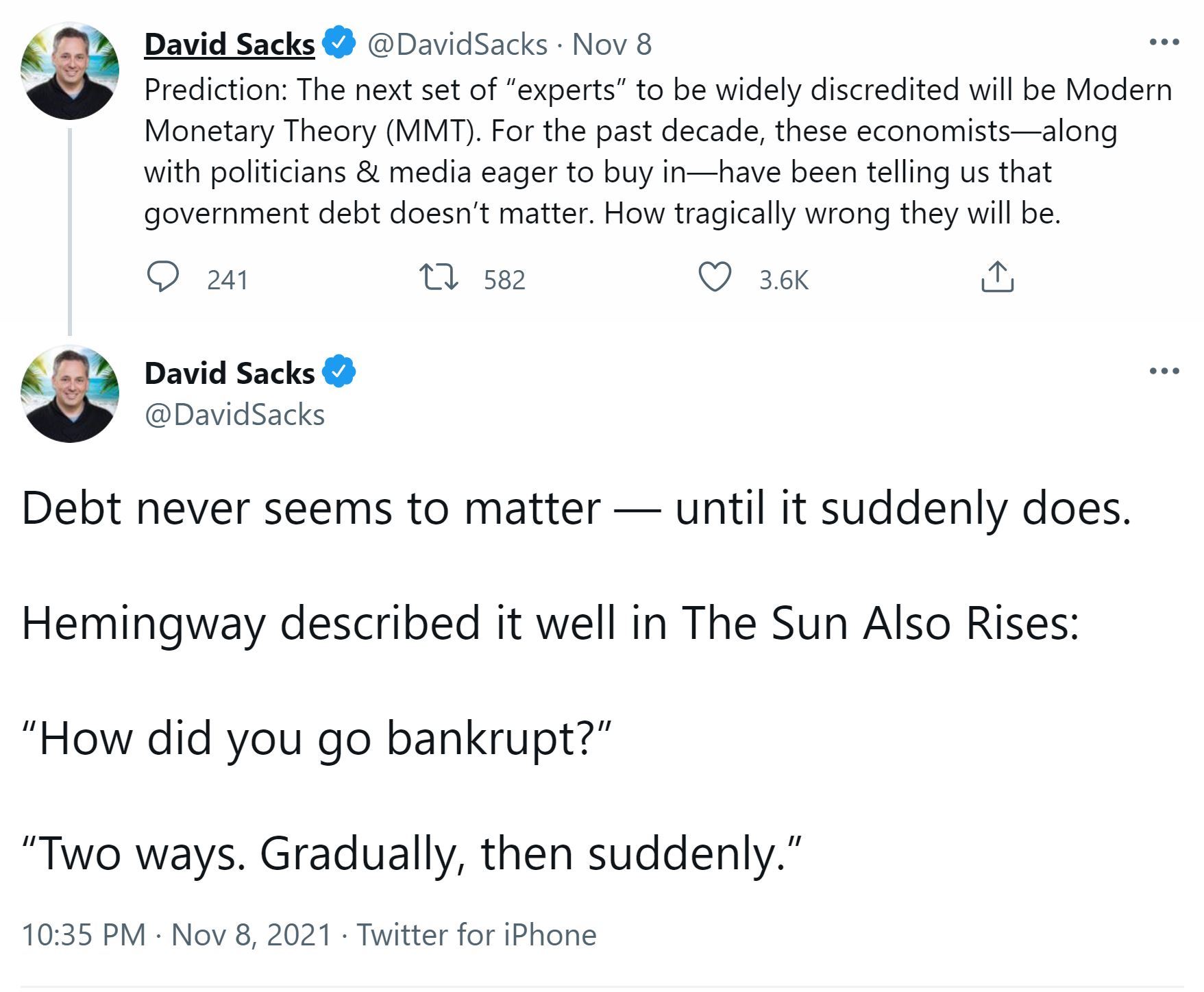
A powerful reminder that debt levels and fiscal prudence do matter over the long-term for governments, businesses and households - it's a question of when, not if.
David rightly acknowledges that the U.S. government can’t technically go bankrupt as long as it controls the money printer and its debt remains denominated in U.S. dollars. However, high levels of debt-to-GDP result in unintended side effects, including distortions that are highly unpredictable in nature.
Click here to read the whole Twitter thread.
Quotes
“The goal is not to be better than the other man, but your previous self.”
— Dalai Lama
"Your attitude, not your aptitude, will determine your altitude."
— Zig Ziglar
Charts
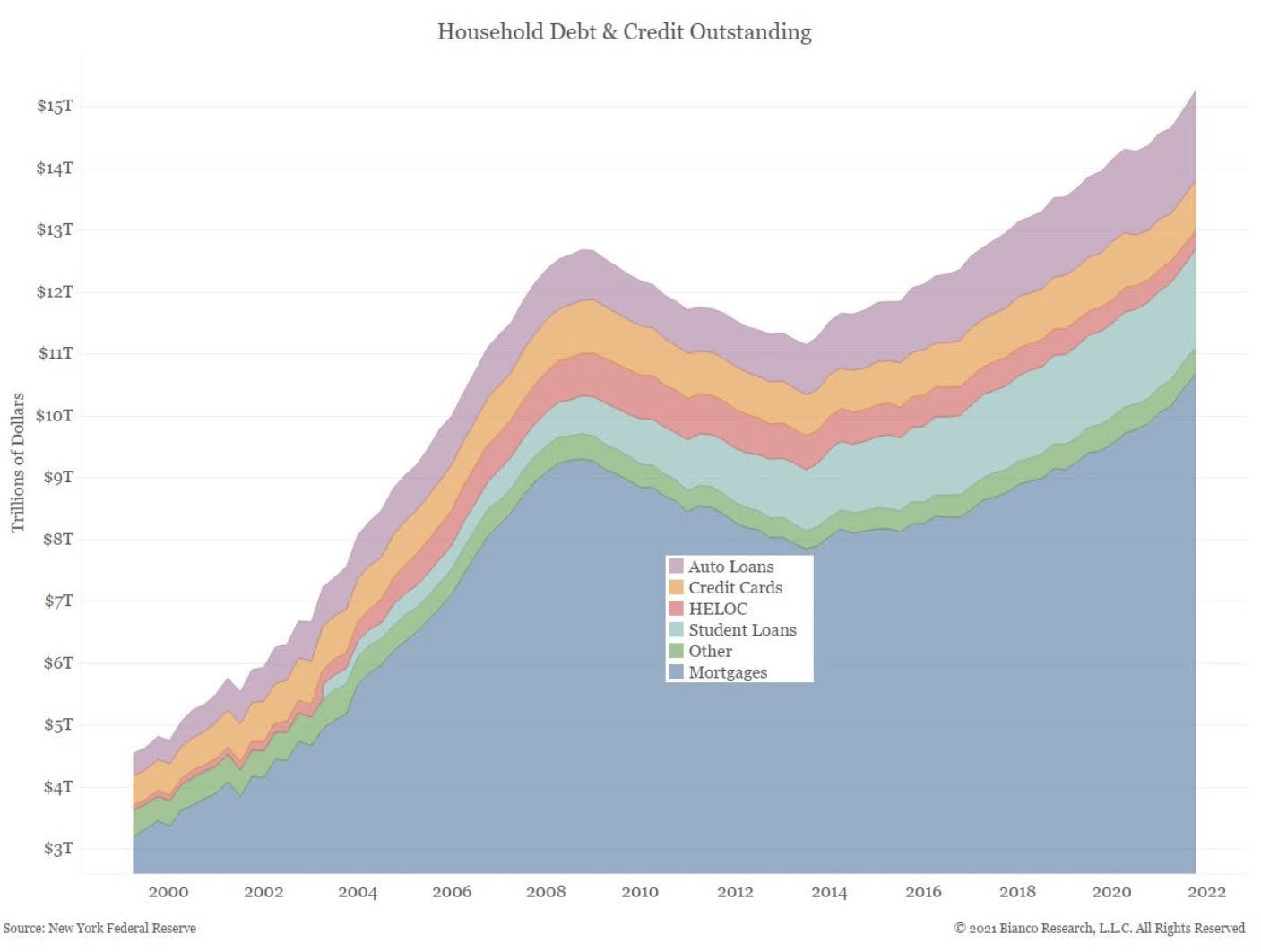
Household Debt
The global financial crisis, which began in 2007 and ended in 2009, was largely caused by cheap credit and lax lending standards. Together they fueled a housing bubble which eventually burst. Interestingly, we have long exceeded the debt levels of that period.
As asset prices continue to rise, households are feeling wealthier. Combined with currently low interest rates, they are encouraged to take on increasing amounts of debt on their balance sheets and feel confident in their ability to pay their monthly interest expenses. The question is, what happens if interest rates were to rise?
Equity Market Speculation
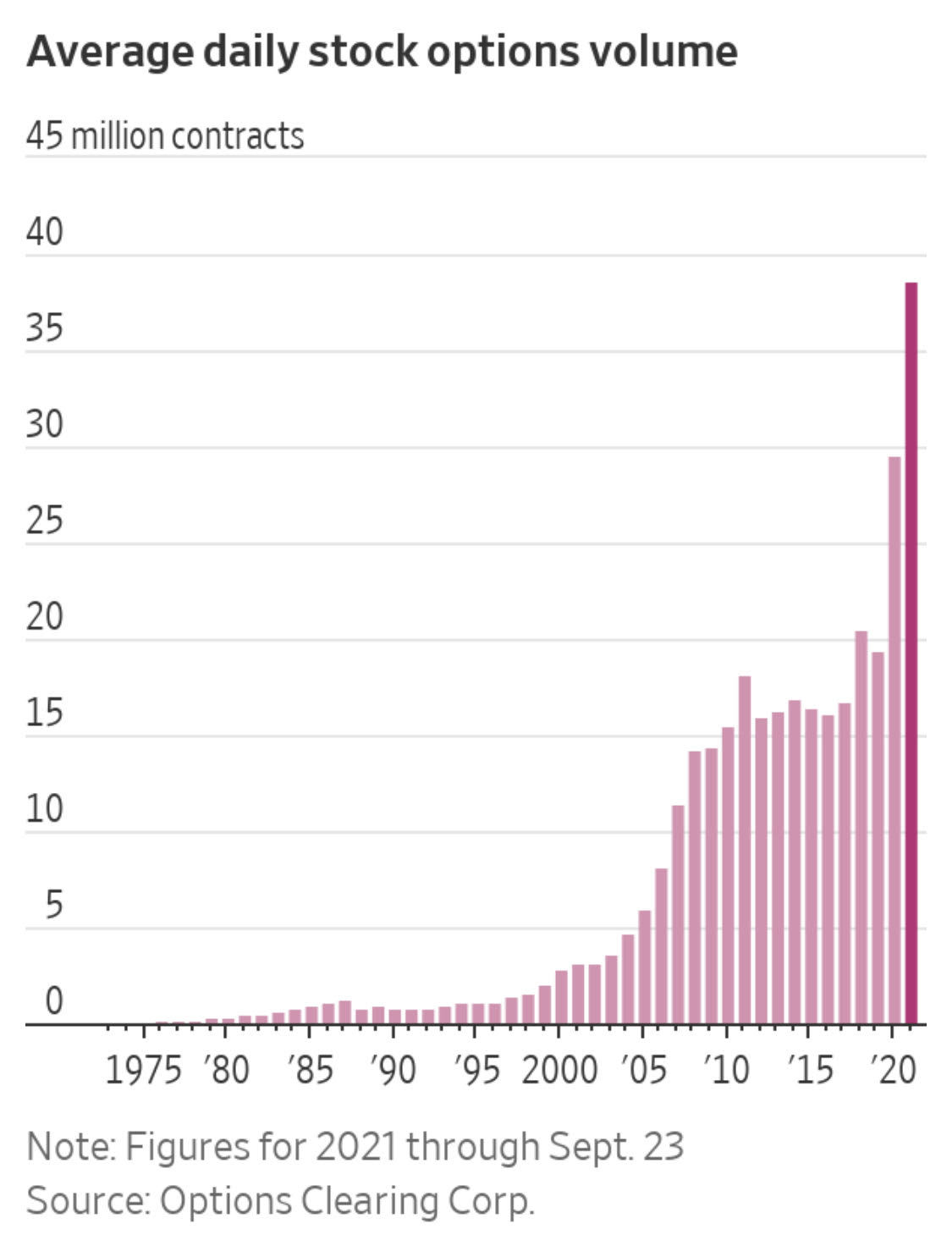
Since the onset of the pandemic, non-professional investors (aka 'retail' investors) have become increasingly active in global equity markets. The chart below shows the average number of options contracts that have been traded since the early 70s.
The dramatic increase over the last 4 years is driven largely by the gamification of investment apps like Robinhood, which has influenced users to shorten their investment horizon. This has resulted in high trading volumes (especially given trades are "free") and the focus on high returns, with little assessment of the risks.
Article
Goldman Sachs CEO David Solomon is sounding the alarm bell, claiming that greed is outpacing fear in world financial markets as investors respond to the pandemic recovery. As he rightly points out, such periods of exuberance do not usually last long and ultimately, they create opportunities for patient investors.
"I think markets generally when I step back and I think about my 40 year career, there's been periods of time when greed has far outpaced fear. We were in one of those periods of time"
"We were in one of those periods of time and generally speaking, my experience says that, you know, those periods are not long-lived."
"Something will rebalance it and bring a little bit more perspective. And given it feels like inflation is running above trend, chances are interest rates will move up and that will take some of the exuberance out of certain markets"
— David Solomon
To read the full article on Reuters click here.
Until next time...
Thank you for reading this week’s issue. If you found it interesting, please consider sharing it with a like-minded friend or family member.
If you have any questions or feedback, please reach out!
Have a great week.
Why ‘Buy the Umbrella’?
Individuals, many of whom also run businesses and governments, tend to not think of the downside when the present is stable, and the future is looking positive (usually when we feel most in control).
Just because it is currently sunny, does not mean it will never rain. We need to buy the umbrella before it rains. Otherwise, by the time we are running around looking for an umbrella in the middle of a storm, they tend to be in short supply.
At the same time, we cannot allow our awareness of risk to make us fearful, pessimistic, or paranoid, as this too works against us over the long-term.
Having the right mindset in advance is critical. The challenge is getting the right balance between being optimistic about the future and being able to not only withstand future crisis, but in fact grow stronger due to the opportunities they tend to present. It is not enough just to be conservative. You need to be willing to put cash to work when others feel least comfortable doing it. To do that with confidence, we need to have a foundational understanding of business and markets.
Our mission is to learn as much about the world as possible, and in doing so, to try to find investment opportunities with favourable risk/reward characteristics. These should, over the long term, help build sustainable wealth.