
Hi there!
Here is your latest dose of ‘Buy the Umbrella’, a short list of interesting things I’ve been reading and thinking about during the week.
Quotes
"Raise your ambitions. Lower your expectations. The higher your ambitions, the bolder your actions. The lower your expectations, the greater your satisfaction. Achieve more and be happy along the way."
— James Clear
"You can't connect the dots looking forward; you can only connect them looking backwards. So you have to trust that the dots will somehow connect in your future."
— Steve Jobs
Charts
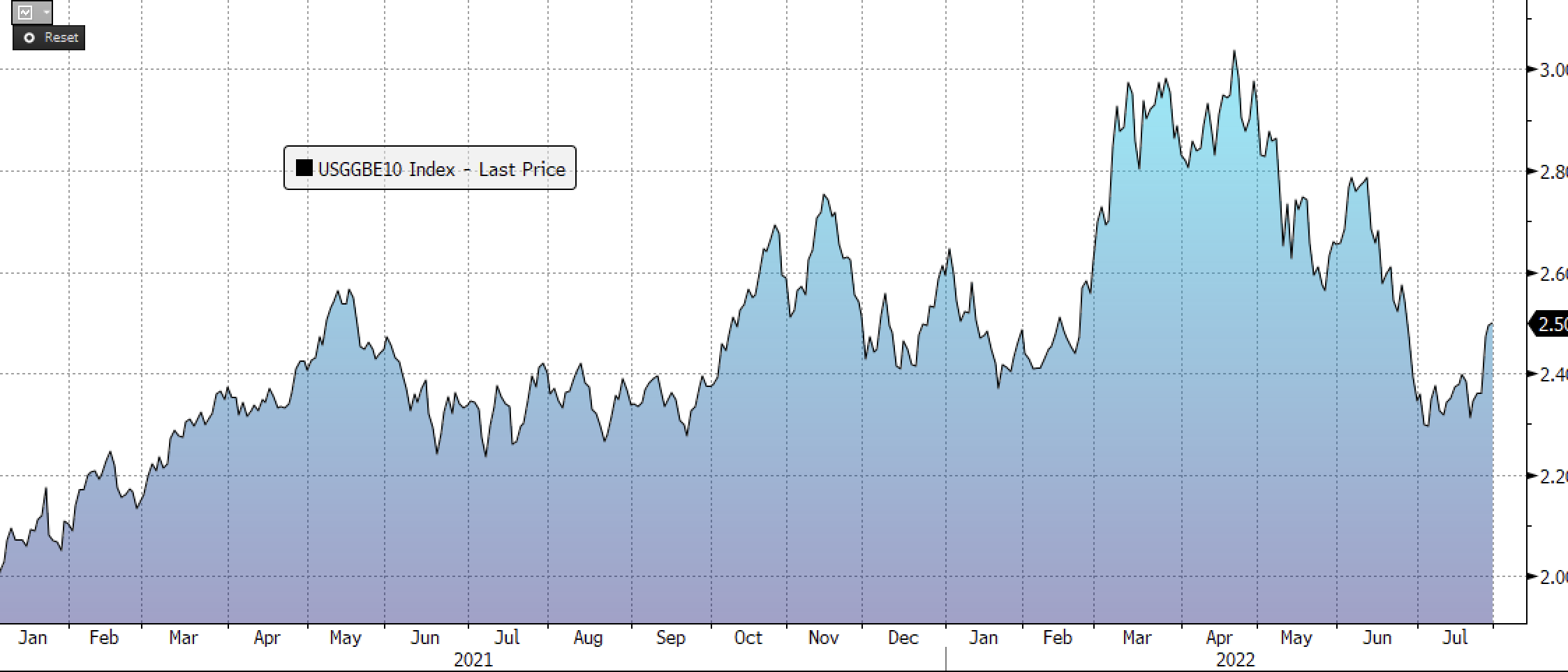
Federal reserve policy and inflation expectations
The Federal Reserve raised interest rates by 0.75% on Wednesday, following a similar sized move in June. We are currently witnessing the fastest tightening of monetary policy since former fed chair Paul Volcker battled double-digit inflation in the 1980s.
Interestingly, the fed was seen to be less hawkish following comments from fed chair Jerome Powell, which spurred hopes for a slower hiking path. As a consequence, inflation expectations spiked, highlighting the difficult challenge the central bank currently faces between ensuring inflation expectations revert towards their 2% goal, while maintaining market stability.
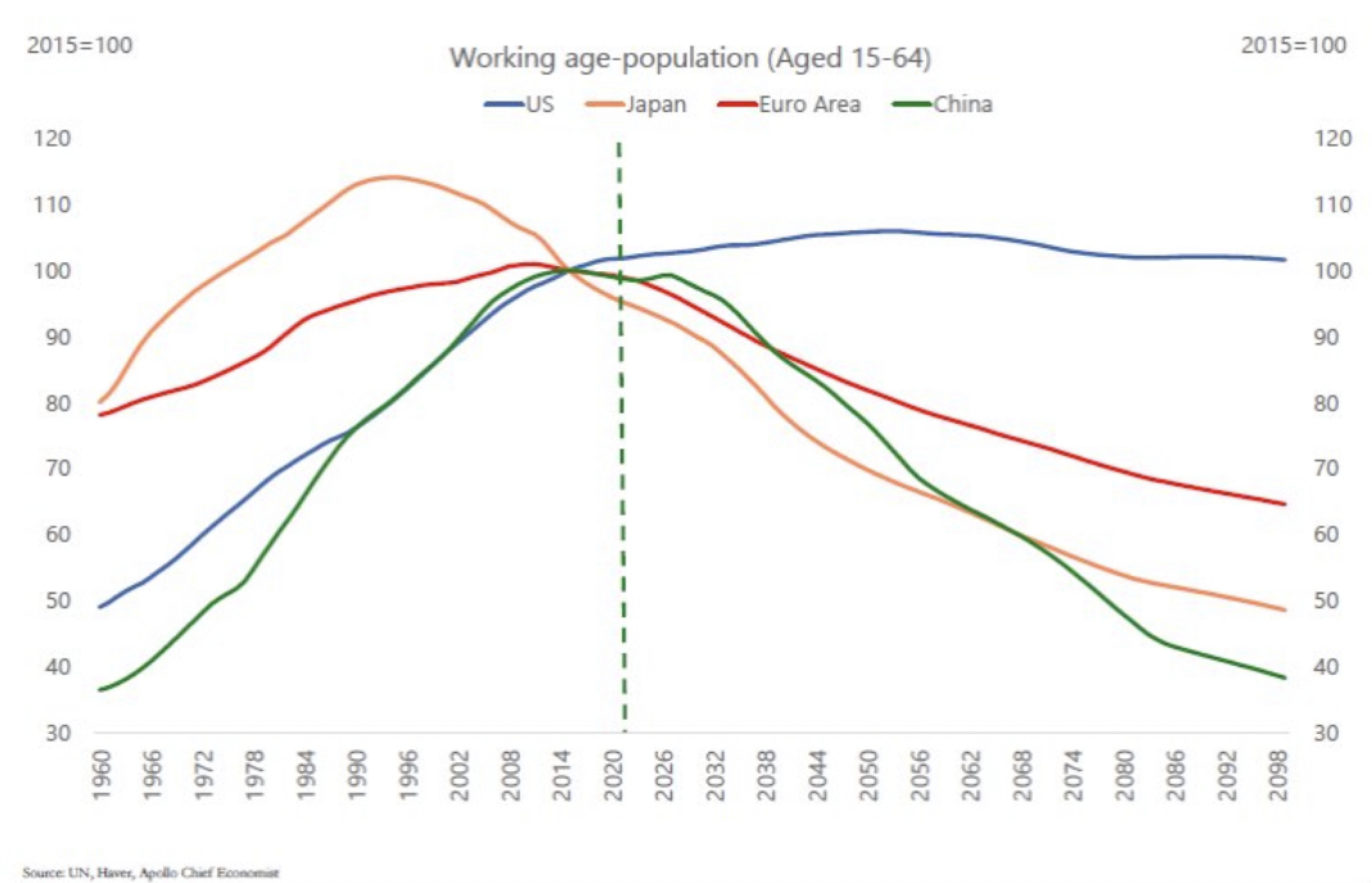
Working age population trends
Apollo put together this fascinating chart that shows the four largest economies' working age population over the next 80 years. The U.S. appears to be in the best position as the other three economies are expected to face a decline, unless immigration policy is adjusted within the latter to counter these trends.
The UN believes that the global population is growing at its slowest rate since 1950, having fallen to less than 1% in 2020. It predicts that the world's population will hit eight billion in November 2022.
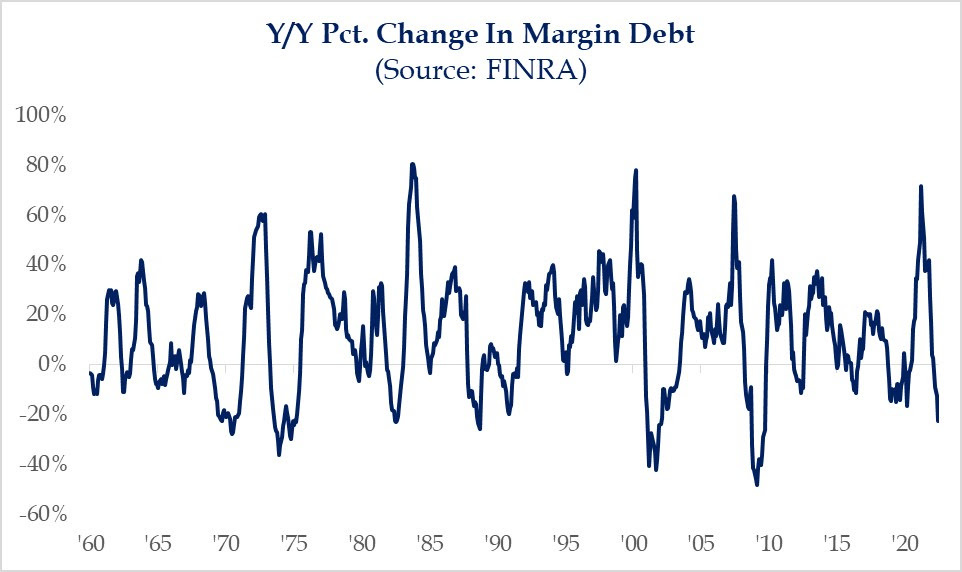
Margin debt declines as markets fall into bear market territory
The latest FINRA data illustrates the deleveraging taking place across equity markets as investors become more cautious. This contrasts to the approximately 80% growth during the elevated bullish mood last year.
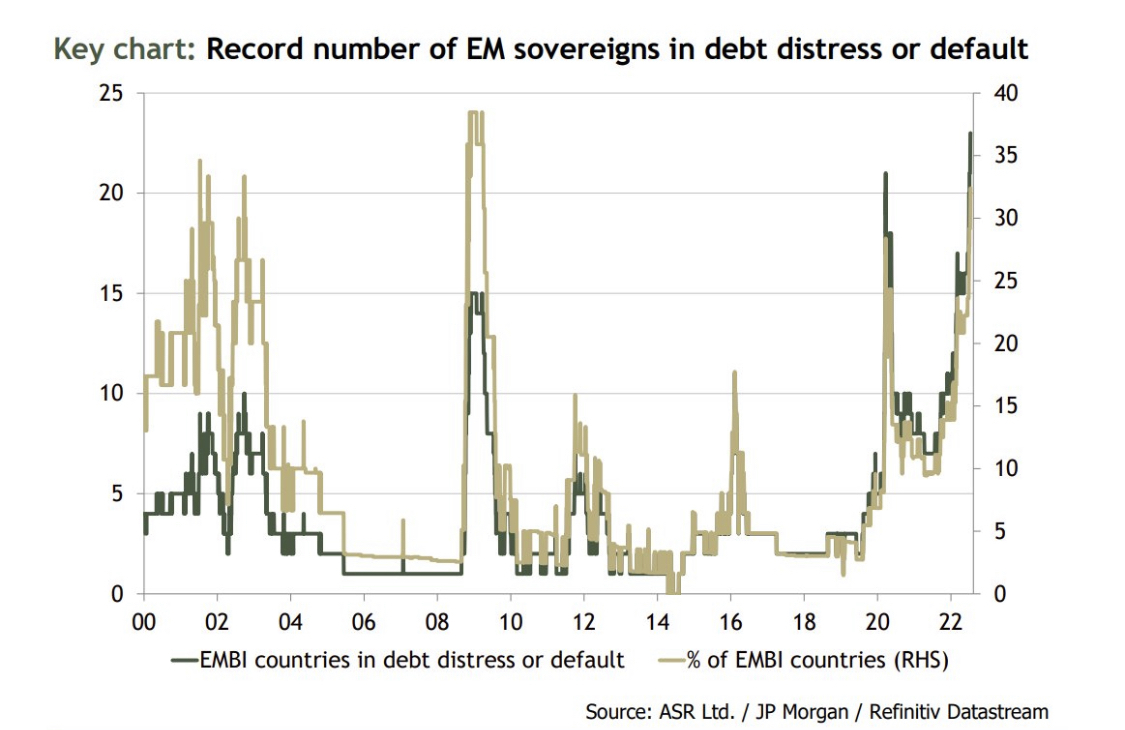
Emerging market sovereigns in distress or default at record high
With interest rates, energy and food prices rising globally, emerging market governments are struggling to refinance their existing debt and as a result have fallen into distress or default.
According to Bloomberg, a quarter-trillion dollar pile of distressed debt is threatening to drag the developing world into default. In particular, it appears that El Salvador, Ghana, Egypt, Tunisia and Pakistan are vulnerable.
Earnings Commentary Insights
Walmart disappointed investors this week, stating that food inflation is "double digits and higher than at the end of Q1" and is hurting its business
Management highlighted that this is affecting customers’ ability "to spend on general merchandise categories and requiring more markdowns to move through the inventory, particularly apparel". The CEO expects more pressure on general merchandise in the second half of 2022.
AT&T and Verizon are experiencing contrasting payment patterns by their customers
AT&T CEO: "Customers are stretching out their payments a bit. We expect they will continue to pay their bills, but they're taking longer to do it. That's not atypical in an economic cycle."
Verizon CEO: "We haven’t seen any noticeable change in the payment patterns from customers, continues to be very good, very much in line with what we were seeing pre-COVID, in fact, slightly better than that time period."
Articles
Germany's industrial companies hit by higher energy costs
The German Chambers of Industry and Commerce (DIHK) said a number of German industrial companies are cutting production in reaction to the burden of high energy prices. A survey of 3,500 companies found that 16% are scaling back production or partially discontinuing business operations.
Last week London came remarkably close to a blackout
The city managed to avoid a blackout last week by paying a record high £9,724.54 per MWh, more than 5,000% higher than the typical price, to briefly import electricity from Belgium due to a combination of surging demand and bottlenecks in the power grid.
CMOC's Congo mine suspends copper and cobalt exports
Congo is the world’s largest producer of cobalt and Africa’s leading copper miner. The country accounted for more than 70% of worldwide cobalt mine production in 2021, which is used in electric batteries.
Congo's government announced last August that it had formed a commission to reassess reserve levels, an interesting development given the rarity of Congolese authorities challenging the Chinese companies that dominate its mining sector. The latest move marks a major escalation from the government.
Average rent in Manhattan was a record $5,000 in June
The average apartment rent in June was an incredible $5,058, the highest on record, according to data gathered by Miller Samuel and Douglas Elliman. Average rental prices were up 29% over last year, while median rent was up by 25% to $4,050 a month.
UAE's ADNOC acquires Zakher Marine International
Abu Dhabi National Oil Company's Logistics and Services (L&S) subsidiary has bought the privately-owned company as it looks to bolster its offshore oil, natural gas and wind businesses with ZMI's offshore support vessels.
Until next time...
Thank you for reading this week’s issue. If you found it interesting, consider sharing it with someone who would enjoy it.
Do you have any questions or thoughts? Please feel free to reach out.
Have a wonderful week.
Why ‘Buy the Umbrella’?
Individuals, many of whom also run businesses and governments, tend to not think of the downside when the present is stable, and the future is looking positive (usually when we feel most in control).
Just because it is currently sunny, does not mean it will never rain. If we are not prepared, once it does begin to rain, we will end up running around looking for an umbrella in the middle of a storm, when they tend to be in short supply. We therefore need to ‘buy the umbrella’ before it rains.
Simultaneously, we cannot allow our awareness of risk to make us fearful, pessimistic, or paranoid, as this too works against us over the long-term.
Having the right mindset in advance is critical. The challenge is getting the right balance between being optimistic about the future and being able to not only withstand future crises, but in fact grow stronger due to the opportunities they tend to present.
It is not enough just to be conservative. One needs to be willing to put cash to work when others feel least comfortable doing it. To do that with confidence, we need to have a foundational understanding of history, business, markets and human psychology.
Our mission at BTU is to learn as much about the world as possible, and in doing so, to try to find investment opportunities with favourable risk/reward characteristics. These should, over the long term, help build sustainable wealth.