
Hi there!
Here is your latest dose of “Buy the Umbrella”, a short list of interesting things I’ve been reading and thinking about during the week.
Quote
“It ain’t what you don’t know that gets you into trouble. It’s what you know for sure that just ain’t so.”
— Mark Twain
Charts
Fed balance sheet run-off aka "quantitative tightening"
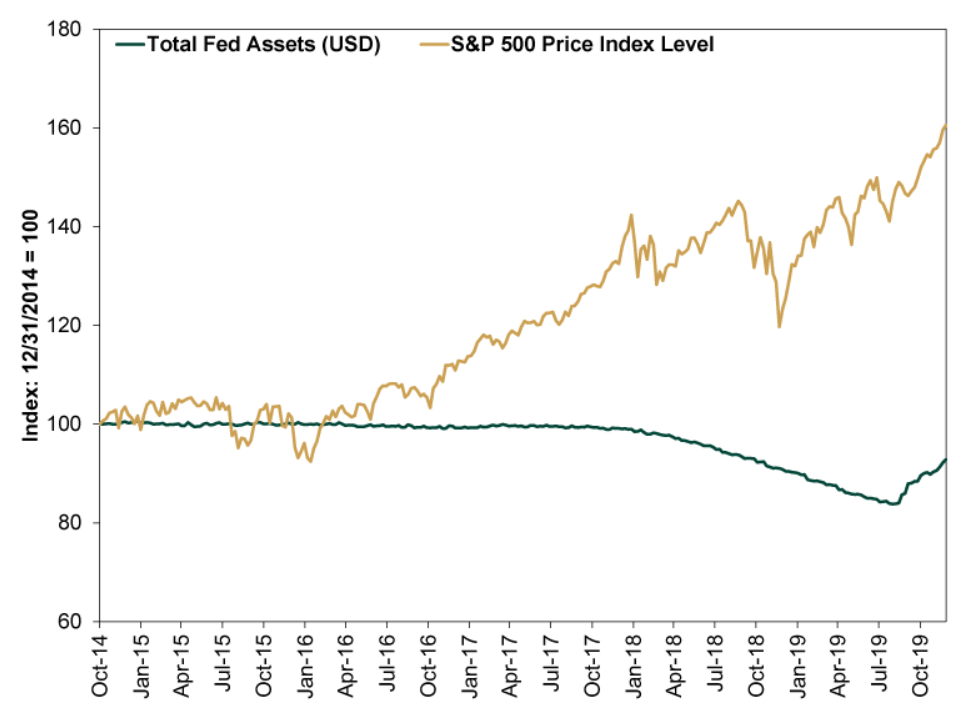
The latest meeting minutes from the U.S. central bank ("the fed") revealed plans to start letting its balance sheet shrink from May this year. This has resulted in widespread discussions by market commentators about the likely negative impact of this decision on the stock market.
However, data suggests that such high-conviction proclamations are misguided: when calculating the correlation between the fed’s balance sheet and S&P 500, since quantitative easing began in January 2009, we get a correlation coefficient of ~0.05. (A quick reminder: a correlation of 1.00 implies the two variables move together in a "perfect" positive relationship, -1.00 implies that they always move in "perfect" opposite directions, and 0 implies no relationship.)
Nitrogen fertilizers impacting rice farmers
Supply shortages are resulting in soaring fertilizer costs which have hit rice farmers across Asia, who are now being forced to scale back their use. According to Our World in Data, fertilizers are used to feed over three billion people.
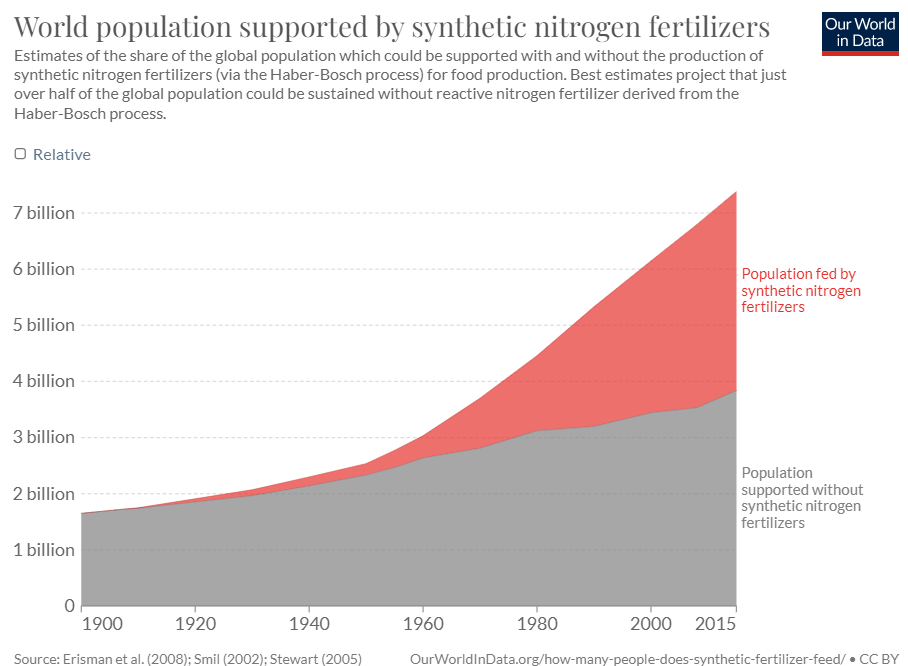
Farmers scaling back their use of fertilizers threatens harvests of critical staples, like rice which feeds half of earth's population, and could lead to a full-blown food crisis if actions are not take to curb pricing pressures. Rice is currently the only major crop that hasn't seen new all time highs yet.
Adding to the list of inflationary food pressures, the Biden administration announced expanded biofuel sales - using corn - to curb rising gasoline prices. This likely short-sighted policy is resulting in further demand for corn, which has seen prices rise 37% this year to a level less than 4% away from a record high set in 2012.
Earnings Commentary Insights
Micron - memory and storage chips producer
Micron's CEO commented that new EV's are becoming "like data centres on wheels and we expect over 100 new EV models to launch worldwide in this calendar year alone". These new EVs include advanced driver assistance systems and in vehicle infotainment features which require "significantly higher memory and storage requirements. Some level 3 autonomous EVs have about $750 in memory and storage content, which is 15 times higher than the average car".
Halliburton - world's second largest oil field services company
Halliburton's CEO commented that he expects "oil and gas demand will grow over the near and medium-term" while "supply remains under a structural threat of scarcity".
He believes "supply dynamics have fundamentally changed due to investor return requirements, public ESG commitments, and regulatory pressures, which make it more difficult for operators to commit to long cycle hydrocarbon investments and instead, drive investment flexibility through short cycle barrels".
As a consequence, oil companies will likely prioritise "short cycle projects, development over exploration, tie-backs versus new infrastructure, and shale rather than deep-water". This will provide operators flexibility and subsequent support to commodity prices as they can "respond more quickly to commodity price signals. As a result, when investment stops, production at a minimum doesn't grow and in the case with unconventionals, it quickly declines".
Article
Mexico's House of Deputies voted to nationalise lithium
The country's lower house backed a mining law amendment to nationalize lithium reserves a day after the bill was sent to lawmakers by President Andres Manuel Lopez Obrador.
"We're going to develop the technology or acquire it, but the lithium is ours," said Lopez Obrador, who was elected in 2018 with a vow to overhaul Mexico's economic system.
Lithium, which is used in electric car batteries and other devices, has seen demand rise significantly as automakers introduce further electric models.
The country currently has just one mine that is close to starting production and is owned by a Chinese firm. It is not yet clear if that mine in northern Mexico would be taken over by the government.
China currently dominates the lithium supply chain while lithium is mined mostly in Australia and South America. According to Bloomberg, lithium prices are up over 120% so far in 2022, while lithium carbonate (battery grade) is up over 100%.
Things that make you go hmm...
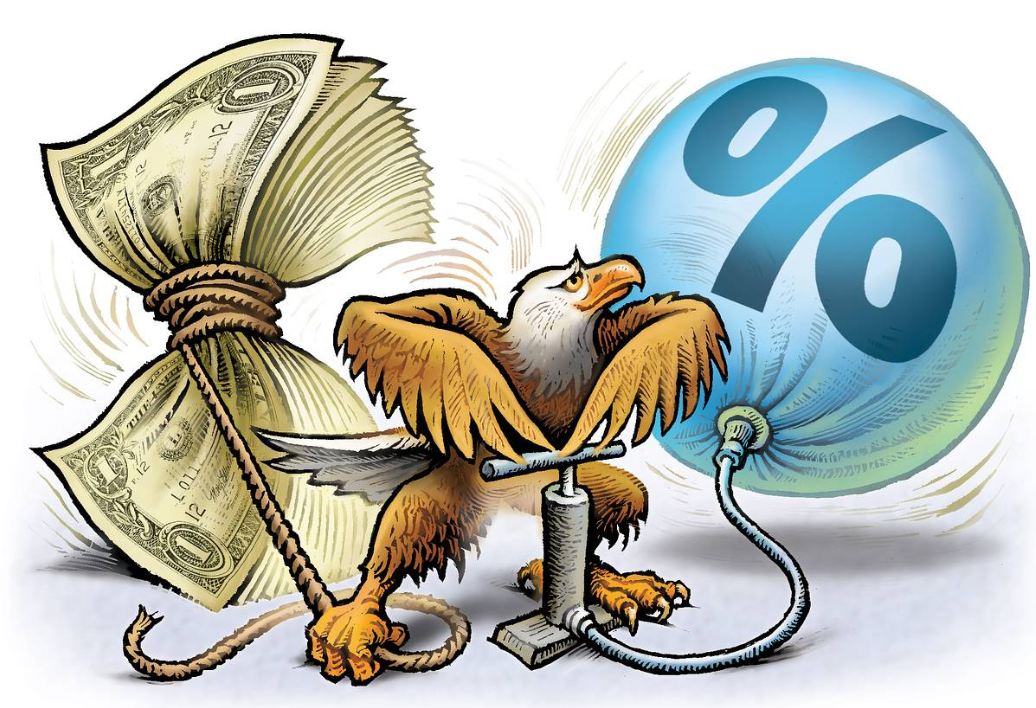
"We were assured by policy makers that QE provided large benefits to the real economy. If so, won't its reversal in the form of QT [quantitative tightening] come with a cost? It can't all be rainbows and unicorns."
— Stanley Druckenmiller & Kevin Warsh, Wall Street Journal on 16th December 2018
Until next time...
Thank you for reading this week’s issue. If you found it interesting, please consider sharing it with a like-minded friend or family member.
If you have any questions or feedback, please feel free to reach out!
Have a great week.
Why ‘Buy the Umbrella’?
Individuals, many of whom also run businesses and governments, tend to not think of the downside when the present is stable, and the future is looking positive (usually when we feel most in control).
Just because it is currently sunny, does not mean it will never rain. If we are not prepared, once it does begin to rain, we will end up running around looking for an umbrella in the middle of a storm, when they tend to be in short supply. We therefore need to buy the umbrella before it rains.
At the same time, we cannot allow our awareness of risk to make us fearful, pessimistic, or paranoid, as this too works against us over the long-term.
Having the right mindset in advance is critical. The challenge is getting the right balance between being optimistic about the future and being able to not only withstand future crises, but in fact grow stronger due to the opportunities they tend to present. It is not enough just to be conservative. One needs to be willing to put our cash to work when others feel least comfortable doing it. To do that with confidence, we need to have a foundational understanding of history, business, markets and human psychology.
Our mission at BTU is to learn as much about the world as possible, and in doing so, to try to find investment opportunities with favourable risk/reward characteristics. These should, over the long term, help build sustainable wealth.