
Hi there!
Here is your latest dose of “Buy the Umbrella”, a short list of interesting things I’ve been reading and thinking about during the week.
Quotes
"Powerful combination = Hate being bad at stuff + Willing to look like a beginner.
People who hate being bad at stuff are driven to improve. However, if they are unwilling to look like a beginner from time to time, they will avoid new challenges and struggle to reinvent themselves.
Meanwhile, people who are willing to try new things, but lack a thirst to improve will settle for mediocre results.
It's the willingness to look foolish for a short time—but not for a long time—that leads to jumps in performance."
— James Clear
"Not everything that can be counted counts, and not everything that counts can be counted."
— William Bruce Cameron
Charts
Rising borrowing costs expected to cool record housing demand
As interest rates rise around the world, mortgages are rising in sync as one would expect. The average 30-year fixed rate home loan in the U.S. has climbed to over 5.1%, up from less than 3.0% a few months ago.
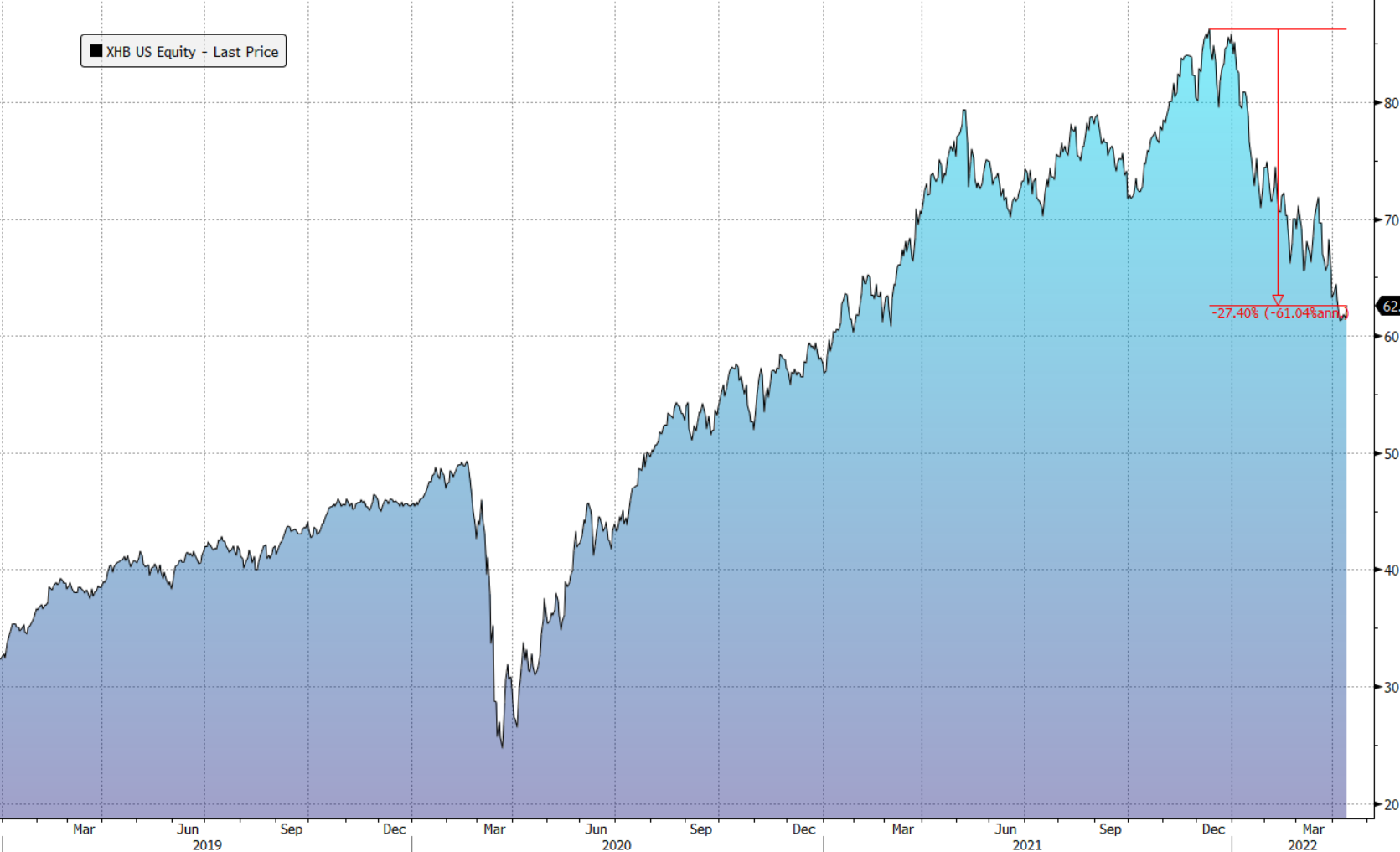
Since the start of the year, the rise in borrowing costs has reduced demand for mortgage applications. U.S. homebuilders' stock prices (using XHB as a proxy) are struggling, down over 27% from their peak in Q4 2021 as higher borrowing costs are expected to dampen demand.
Low jet fuel inventories push prices higher
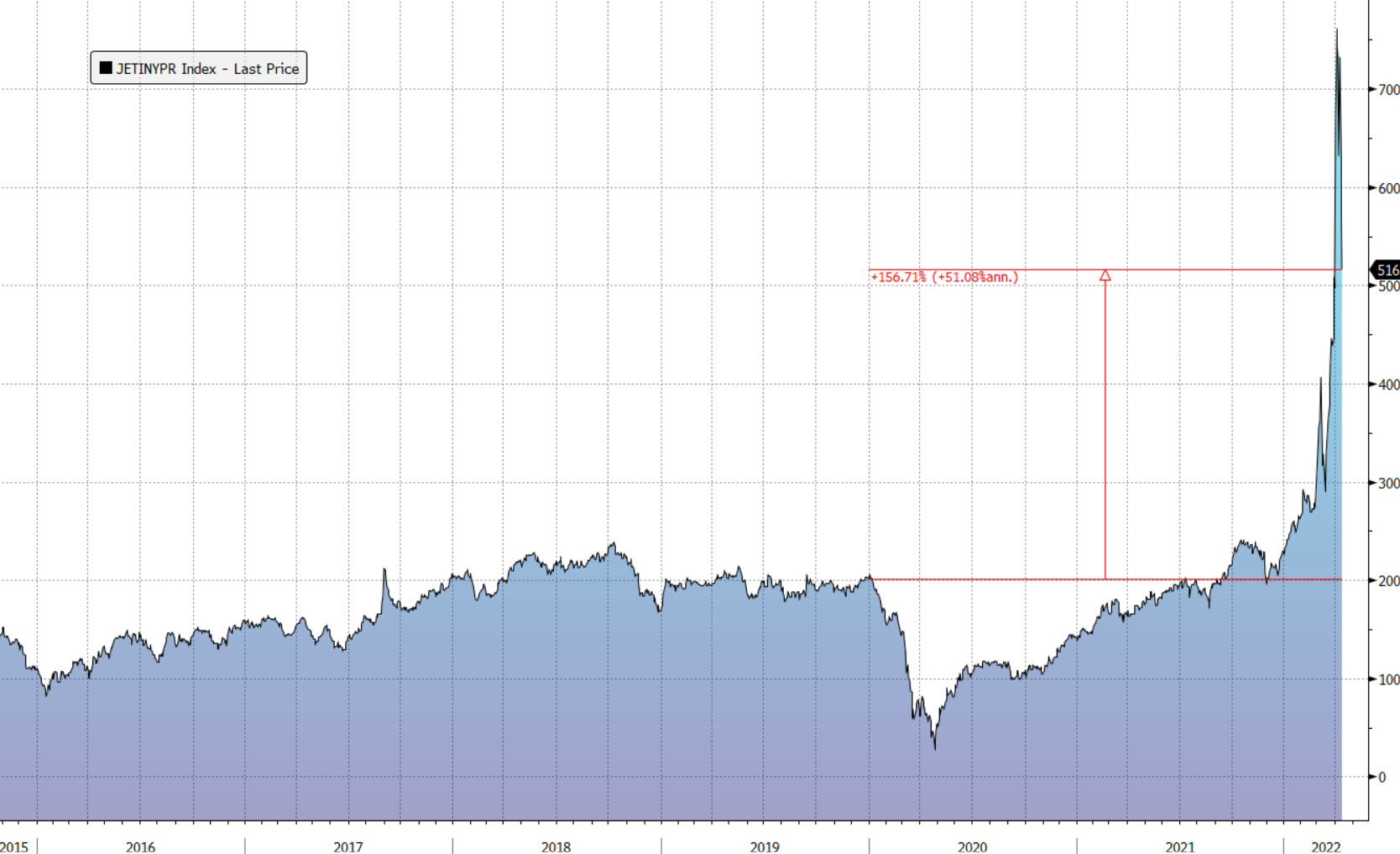
Jet fuel is one of the major petroleum products produced from processing crude oil in a refinery. The cost of jet fuel, as measured by the US New York Harbour index, is up over 150% since the start of 2020 as a result of low inventories. Spot prices are currently trading a large premium over futures. It will be interesting to see how airlines respond to these pricing dynamics.
Investor sentiment hurt by negative backdrop
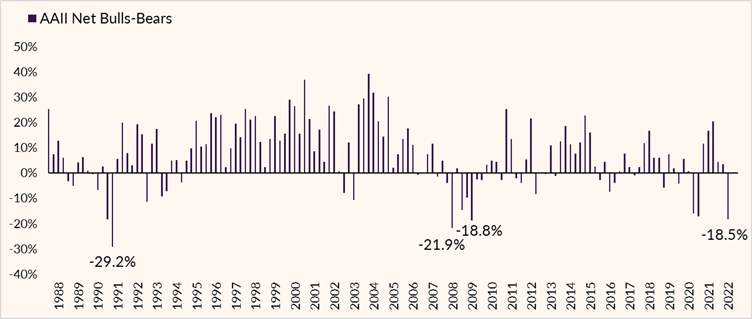
The American Association of Individual Investors' (AAII) stock sentiment survey recorded the fourth worst quarterly average net bulls-bears since 1987, suggesting extremely weak sentiment from investors. This is unsurprising given the number of worries the market is currently dealing with.
Could this feed a 'wall of worry' rally higher for the market?
Articles
Sri Lanka will default on foreign debt to save cash for food
On Tuesday, Sri Lanka warned of an unprecedented default and halted payments on foreign debt, an extraordinary step taken to preserve its dwindling dollar stockpile for essential food and fuel imports. According to its statement, the government is willing to pay holders of its affected debt in Sri Lankan Rupee.
Reports suggest that Sri Lankans are experiencing surging inflation, long queues at fuel pumps and blackouts that are engulfing at least half of the day.
The recent challenges follow a significant rise in government borrowings enabled by the central bank, resulting in the total money supply in the country growing by 40% over a 25-month period beginning in January 2020. Interestingly, many countries pursued a similar strategy during the onset of covid-19 pandemic, including major economies such as the U.S. and EU.
China's cabinet will use timely cuts in banks' reserve requirement ratios to support the economy
The second largest economy in the world is currently battling its worst covid-19 outbreak in two years, hurting its economy in the process due to widely-publicised lockdowns in Shanghai and other cities.
In response, the State Council said on Wednesday that it would step up financial support for the economy, including lowering financing costs, especially for industries and small firms hit by the pandemic.
South Korea signals policy reversal of its nuclear fuel phaseout plan
The country's incoming administration believes that the prior government's push to reduce the share of nuclear power in South Korea's energy mix has increased greenhouse gas emissions and threatened to increase energy bills.
According to the International Energy Agency coal accounted for 42% and natural gas 25% of South Korea’s energy mix in 2019.
In Buy the Umbrella Issue #2 we highlighted the potential for global policy makers to lean back into nuclear energy as a two-birds-one-stone solution: reliable and zero-emissions energy. Uranium, the commodity used in nuclear power plants, has seen prices (using Sprott Physical Uranium Trust as a proxy) rise by approximately 40% since the end of October 2021.
Brazil central bank quadruples exposure to Chinese yuan
Following Russia's footsteps, the Brazilian central bank trimmed holdings of U.S. dollars. It simultaneously reduced its holdings in euros while building reserves of currency from its biggest trade partner China.
Brazil also increased the exposure of its reserves to other currencies - including the Japanese yen, British pound, Canadian dollar, Australian dollar - and gold.
Central bank reserves have come into the spotlight recently after Russia's U.S. dollar and euro reserves were frozen by their respective governments. In particular, the U.S. froze $300 billion of Russia's gold and foreign exchange reserves. Learning from this, other central banks will likely ensure they hold a certain amount of gold reserves locally.
Elon Musk offers to buy Twitter for $54.20 a share, saying it needs to be ‘transformed as private company’
On Thursday, Musk announced an offer to buy Twitter and take it private. This comes after the Tesla CEO built a 9.2% stake in the company having started accumulating shares in January.
Question some are asking: will he reverse Donald Trump's ban from the platform, given Musk's belief that "free speech is essential to a functioning democracy"?
Reflection of the month
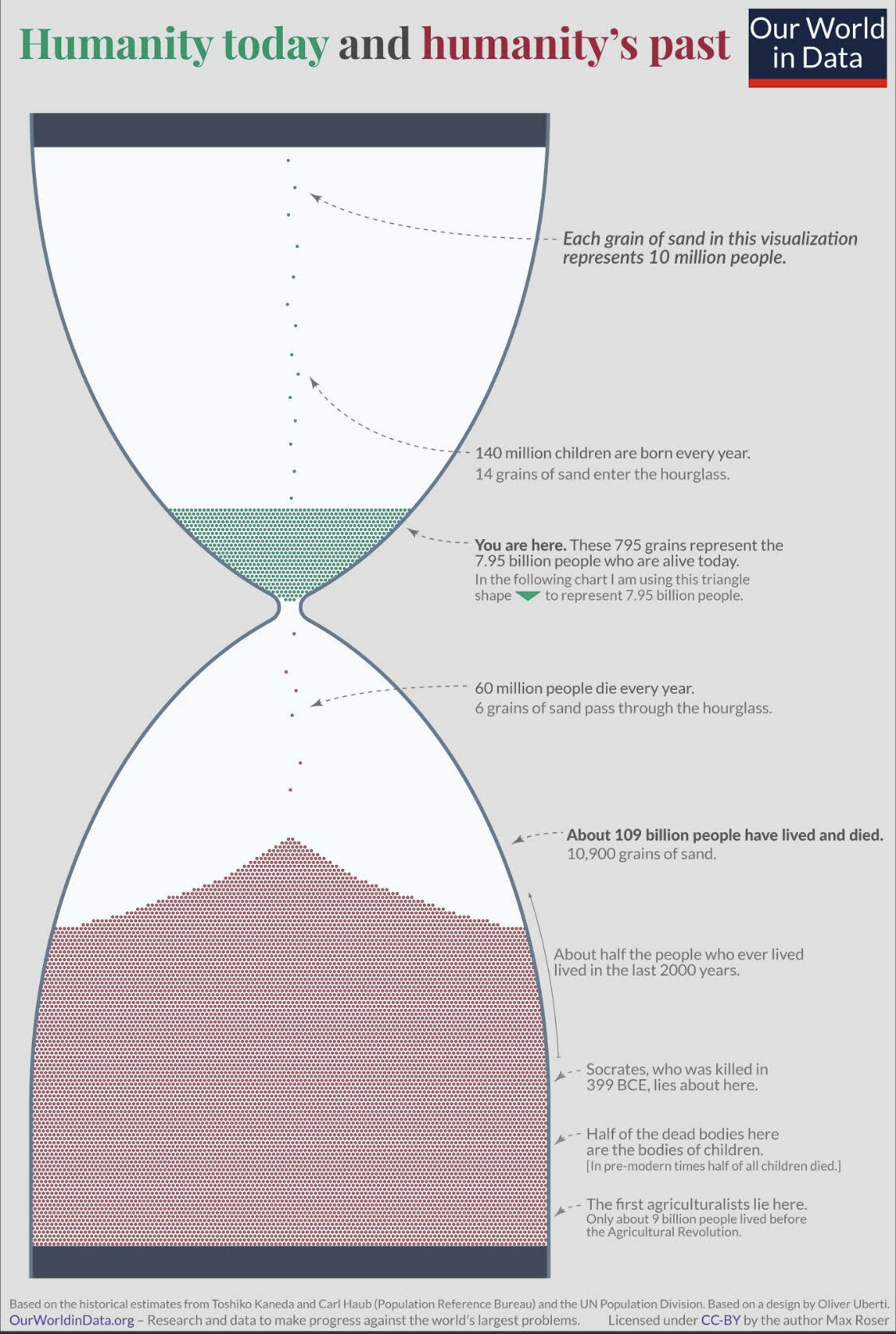
Our World in Data has produced a fascinating graphic using one grain of sand to represent 10 million people.
Green gains of sand represent humans that are alive today, while red grains represent the 109 billion people that previously lived.
Until next time...
Thank you for reading this week’s issue. If you found it interesting, please consider sharing it with a like-minded friend or family member.
If you have any questions or feedback, please feel free to reach out!
Have a great week.
Why ‘Buy the Umbrella’?
Individuals, many of whom also run businesses and governments, tend to not think of the downside when the present is stable, and the future is looking positive (usually when we feel most in control).
Just because it is currently sunny, does not mean it will never rain. If we are not prepared, once it does begin to rain, we will end up running around looking for an umbrella in the middle of a storm, when they tend to be in short supply. We therefore need to buy the umbrella before it rains.
At the same time, we cannot allow our awareness of risk to make us fearful, pessimistic, or paranoid, as this too works against us over the long-term.
Having the right mindset in advance is critical. The challenge is getting the right balance between being optimistic about the future and being able to not only withstand future crises, but in fact grow stronger due to the opportunities they tend to present. It is not enough just to be conservative. One needs to be willing to put our cash to work when others feel least comfortable doing it. To do that with confidence, we need to have a foundational understanding of history, business, markets and human psychology.
Our mission at BTU is to learn as much about the world as possible, and in doing so, to try to find investment opportunities with favourable risk/reward characteristics. These should, over the long term, help build sustainable wealth.