
Hi there!
Here is your latest dose of “Buy the Umbrella”, a short list of interesting things I’ve been reading and thinking about during the week.
Quotes
"Learning to ignore things is one of the great paths to inner peace."
— Robert J. Sawyer
"I cannot forecast to you the action of Russia. It is a riddle wrapped in a mystery inside an enigma; but perhaps there is a key. That key is Russian national interest."
— Winston Churchill
Charts
Wealth inequality
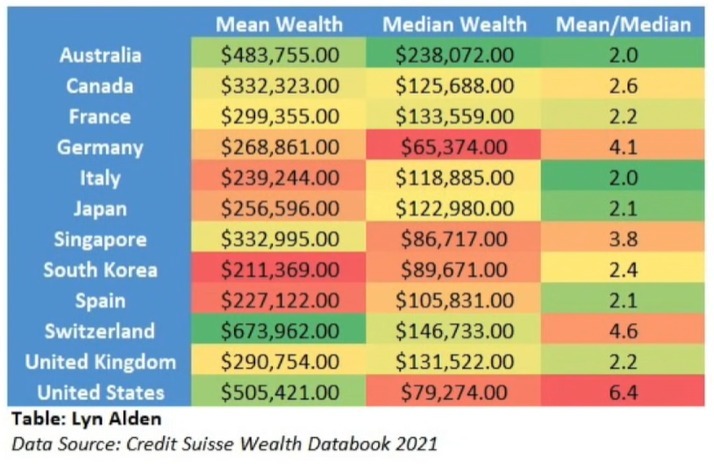
Credit Suisse produced a fascinating piece on the wealth gap in various developed countries around the world. Unsurprisingly, the U.S. had the widest gap between mean and median wealth. What is quite shocking is how big that gap is, even when looking at it from a relative basis to the other countries.
Interestingly, Australia and Italy had the lowest wealth gap in the sample.
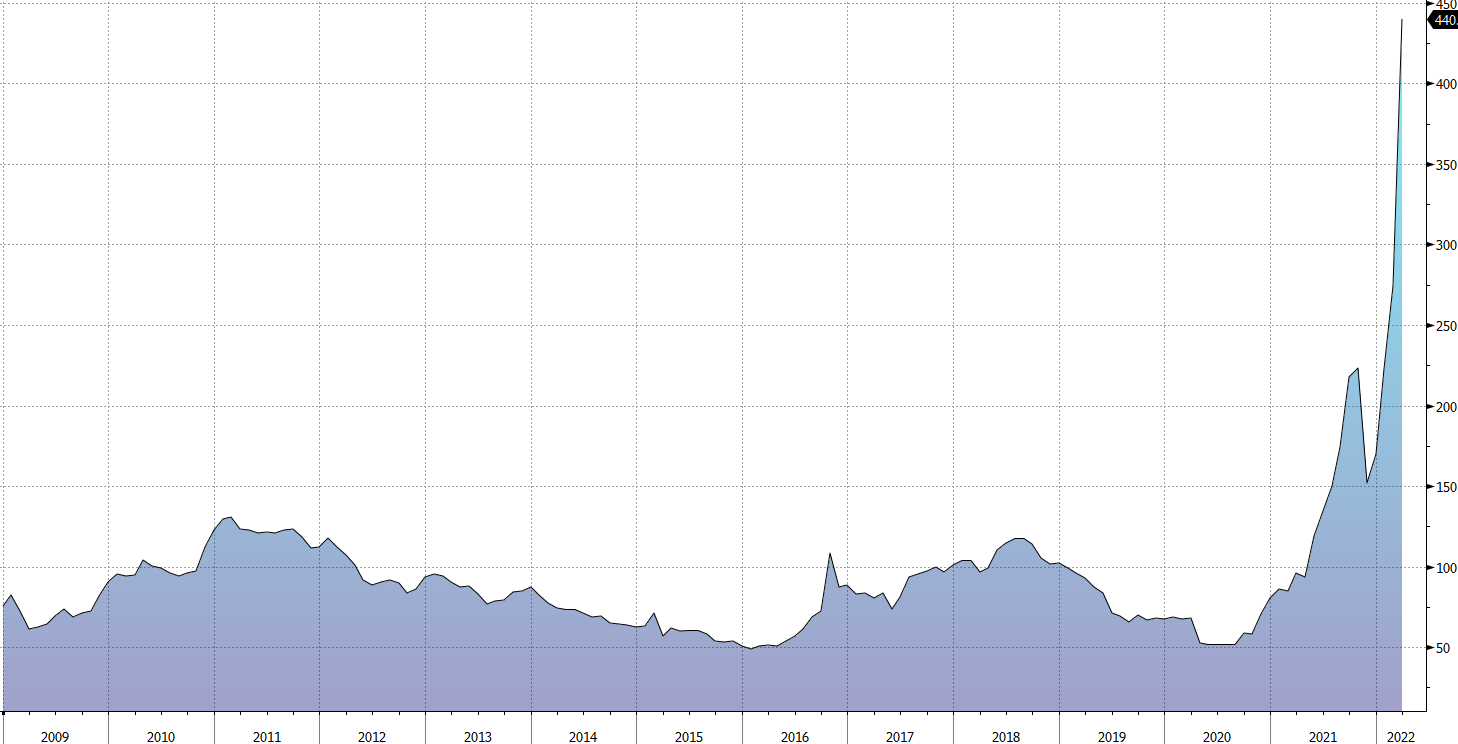
Global race to secure coal sparked by fears of a shortfall in supply from Russia
Given Russia is one of the biggest producers of coal, the invasion of Ukraine and the subsequent sanctions have sent prices to levels never seen before. Utilities in Europe have rushed to find replacements, given they import more thermal coal from Russia than any other country. This is pressuring a market already in tight balance after outages and other curbs this year at major production hubs.
Newcastle coal futures, the benchmark for Asia (the highest coal consuming region), soared over 40% to a record of $446 a ton on Wednesday. This is the highest level in data going back to 2008, according to ICE Futures Europe.
Podcast
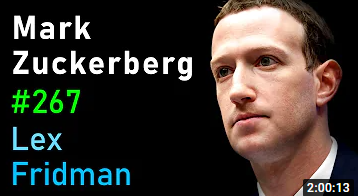
Lex Fridman conducted a rare public interview with Mark Zuckerberg (Founder and CEO of Meta, formerly Facebook). Fridman is an Artificial Intelligence researcher working on autonomous vehicles, human-robot interaction, and machine learning at MIT.
The interview covers a range of topics, including Zuckerberg's views on:
Views on recruitment ("hire people who you would be happy to work for if they were your boss")
Freedom of speech
Facebook's negative coverage in the press
Children ("all children are artists")
Artificial Intelligence and Augmented Reality
The interview (available here) is a worthwhile watch for those interested in what the social media company is pursuing.
Letters
Warren Buffett's annual shareholder letter
Berkshire Hathaway's incredible track record, under Warren Buffett and Charlie Munger, goes back all the way to 1965. The pair have achieved a compounded annual return of 20.1% (vs. S&P500's 10.5%) or a cumulative 3,641,613% (vs. S&P500's 30,209%).
His coveted annual letter covered a vast array of topics, as we have come to expect from the 'Oracle of Omaha'. A few points that stood out to us include:
When Buffett was interviewing Ajit Jain, he asked him in 1986 what his insurance experience had been. He replied, "None". Despite this, Buffett still hired him based on other factors he deemed more important. Thirty-five years later, Jain continues to lead the insurance business and has created tens of billions of dollars of value for Berkshire.
Berkshire currently finances "about 1/2 of 1% of the publicly-held national debt" in the U.S.
"I always kept at least 80% of my net worth in equities. My favoured status throughout that period was 100% - and still is".
"People who are comfortable with their investments will, on average, achieve better results than those who are motivated by ever-changing headlines, chatter and promises".
Buffett emphasises that there are many factors that influence valuations, but interest rates are always important: "Long-term interest rates that are low push the prices of all productive investments upward, whether these are stocks, apartments, farms, oil wells, whatever".
"Teaching, like writing, has helped me develop and clarify my own thoughts" - this is a key driver behind writing Buy the Umbrella.
Investor Report
Distortions of Cheap Energy by Goehring & Rozencwajg
This thirty-four page end of year report on the commodities market is a fascinating read, notwithstanding the biases that a team who are entirely focused on the commodities sector will naturally hold.
Below are some noteworthy takeaways.
Renewables and cheap capital
In 2020 alone, $700 billion was allocated to ESG-friendly energy investments.
G&R believe the huge investments made in renewables over the last decade are responsible for the energy crisis that is gripping Europe today.
Cheap capital in the form of low interest rates leads to malinvestment in the financial world. Cheap energy has now led to malinvestment in the new technologies that are energy inefficient.
Natural gas power generation is said to have one of the best Energy Return on Energy Invested (EROEI) at 30:1, while Nuclear power plants have the highest EROEI at 100:1. This compares to solar and wind's 3.5:1 after adjusting for intermittency and redundancy.
G&R believe that low energy prices have distorted the true costs of wind and solar over the last decade - every form of primary energy (oil, natural gas, coal and uranium) fell by nearly 90% from peak to trough - G&R have gone back 150 years and cannot find a similar ten-year drop.
While many investors believe higher energy prices will ensure renewables become cheaper on a relative basis, it completely ignores the fact that "energy itself makes up the single largest cost component for both wind and solar". Higher energy costs will therefore drive up the costs of renewable energy. Case in point: Bloomberg New Energy Finance recently published their 2022 lithium-ion battery projections and indicated that prices would likely rise for the first time in a decade.
Oil
Just 18 months ago, conventional wisdom held that 2019 would mark the all-time peak in global oil demand. Instead, global oil inventories have fallen to their lowest reading in 20 years and G&R estimate that the oil market has been in outright deficit since 2020 by over 1 million barrels per day - "the most pronounced and most sustained deficit in history".
2022 demand will likely surpass the previous record with no signs of slowing down any time soon. "As with natural gas, the crisis emerging in oil will come of nowhere and catch everyone by surprise". The IEA now expects global demand to reach nearly 102 million barrels per day in Q3 2022.
G&R would not be surprised to see oil ultimately spike to $150-200 a barrel given the supply constraints - "never in the history of the world oil markets have we been in this situation --- we are about to enter unchartered territory".
Natural Gas
Best performing commodity in 2021, up 300% in Europe (exceeding $300 per barrel in oil equivalent terms). Natural gas prices continue to rise this year.
Gold and Silver
G&R believe that for "anyone with a long-term investment horizon", gold and silver exposure continue to be attractive.
Base Metals
Saudi Arabia has opened up their mining industry for the first time ever to foreign companies.
Globally, copper mine production is only up slightly from where it was in 2016 despite resilient demand, which is starting to impact inventories.
Confirming the tightness in supply, Copper futures are in backwardation (future prices trading at a discount to spot prices). "Today, copper inventories cover daily consumption by only 3 days, and we are again approaching the dangerously low levels seen back in 2005". In 2005, copper prices surged 2.5 times in six months.
Copper prices have been trading in a tight band over the last 12 months.
Fertilizers
The production of fertilizer is "incredibly energy intensive - especially nitrogen". As energy prices have risen, several companies and countries have cut back production and introduced export restrictions.
Nitrogen needs to be applied 1-2 times every year, otherwise crop yields are impacted, which ultimately impacts food prices.
Urea and potash prices advanced 210% and 180% in 2021, with shortages beginning to emerge.
Until next time...
Thank you for reading this week’s issue. If you found it interesting, please consider sharing it with a like-minded friend or family member.
If you have any questions or feedback, please reach out!
Have a great week.
Why ‘Buy the Umbrella’?
Individuals, many of whom also run businesses and governments, tend to not think of the downside when the present is stable, and the future is looking positive (usually when we feel most in control).
Just because it is currently sunny, does not mean it will never rain. If we are not prepared, once it does begin to rain, we will end up running around looking for an umbrella in the middle of a storm, when they tend to be in short supply. We therefore need to buy the umbrella before it rains.
At the same time, we cannot allow our awareness of risk to make us fearful, pessimistic, or paranoid, as this too works against us over the long-term.
Having the right mindset in advance is critical. The challenge is getting the right balance between being optimistic about the future and being able to not only withstand future crises, but in fact grow stronger due to the opportunities they tend to present. It is not enough just to be conservative. One needs to be willing to put our cash to work when others feel least comfortable doing it. To do that with confidence, we need to have a foundational understanding of history, business, markets and human psychology.
Our mission at BTU is to learn as much about the world as possible, and in doing so, to try to find investment opportunities with favourable risk/reward characteristics. These should, over the long term, help build sustainable wealth.